The Caffeinated Runner – A Personal Experiment With Coffee, Running, and Gut Health
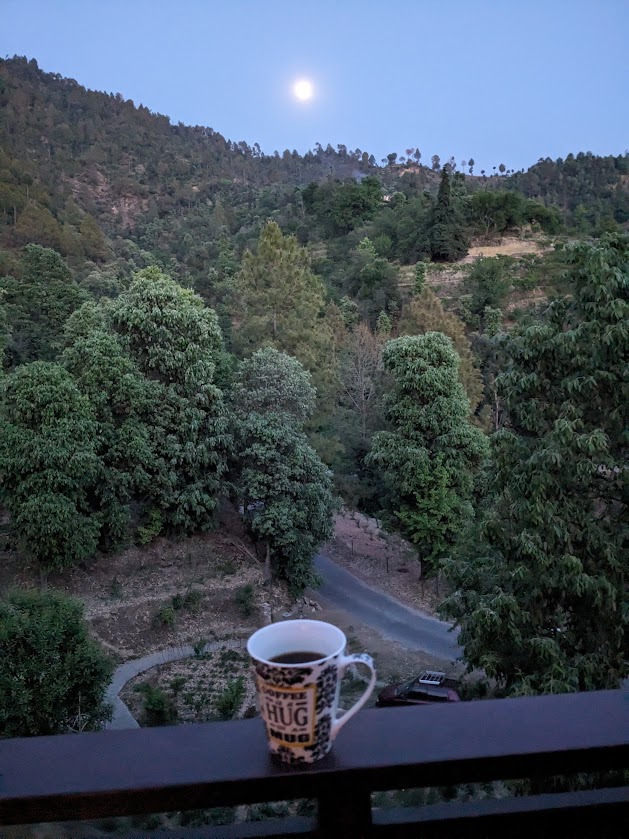
A personal running journal on caffeine, habit, recovery, and performance culture.
The Caffeinated Runner
For years, coffee was deeply integrated into my routine.
Morning coffee. Office coffee. Pre-run coffee. Post-run coffee. Long-drive coffee. Weekend coffee stops after runs.
Like many runners and working professionals, I never really questioned it. Coffee felt normal. Productive. Even useful.
But somewhere along the way, I started noticing patterns that were becoming difficult to ignore.
☕ How Coffee Entered My Life
Interestingly, I did not grow up around coffee culture.
Coming from the mountains of Kumaon, tea was certainly part of the broader culture and landscape around us. I had even written earlier about the tea-growing traditions of my hometown in my post on Kumaon and Himalayan tea culture. But personally, my relationship with tea was always a little different. Tea was deeply woven into family life around me — most families in the hills, including ours, were heavy tea drinkers. I actually enjoyed preparing tea more than drinking it myself.
Some of my childhood memories are also connected to tea gardens. During summer vacations, my friends and I would sometimes pluck tea leaves just for fun, without realizing that years later I would end up writing about tea culture, coffee habits, and caffeine itself.
Even during my student years and early work life, coffee remained mostly occasional usually during social gatherings, travel, or long conversations. I never really liked milk coffee much, and even tea, despite being culturally familiar, was never something I consumed heavily.
My real introduction to coffee happened during my first Europe visit around 2008.
Most of my colleagues there were deeply into black coffee. It was not just a beverage; it was part of work culture, conversations, meetings, and everyday routine. Somewhere during that phase, I slowly started drinking black coffee myself.
Initially, it was simple instant black coffee.
Over time, that evolved:
- Instant coffee became coffee beans,
- Occasional cups became daily routine,
- And curiosity became experimentation.
I genuinely enjoyed it.
Over the years, I experimented with different styles:
- Black coffee,
- Freshly ground beans,
- Stronger brews,
- And even phases where I added MCT oil and explored performance-focused coffee ideas.
And honestly, coffee did help me for many years.
It became part of:
- Work,
- Long coding sessions,
- Travel,
- Writing,
- And eventually running culture too.
One thing I always maintained reasonably well was timing. I almost always consumed coffee only before noon, which probably helped prevent even worse sleep or recovery issues.
None of this happened suddenly.
That is probably the important part.
Coffee did not enter my life as an addiction.
It entered slowly:
- Through culture,
- Work,
- Travel,
- Performance,
- Community,
- And routine.
Somewhere over the years, something intentional slowly became automatic.
🏃 Why I Started This Experiment
This was not a dramatic “quit coffee forever” decision.
It started as a simple experiment.
Over the last few months, I had been experiencing:
- Upward gas and bloating,
- Persistent dry mouth,
- Stomach discomfort after office coffee,
- Occasional sulfur-like smell/gas,
- And a feeling that my stomach was rarely fully calm.
As an ultrarunner, I also began wondering whether caffeine had slowly shifted from a performance tool to a dependency.
Was coffee helping my energy levels?
Or was it masking fatigue and recovery stress?
So I decided to do something very simple:
The First Few Days
The interesting part was not the headache or withdrawal.
It was the habit loops.
I realized how many moments in the day were psychologically connected to coffee:
- Office breaks,
- Post-lunch routines,
- Social conversations,
- Weekend café stops after runs.
Many times, I walked toward the coffee machine almost automatically.
That was my first realization:
Sometimes habits become invisible until you interrupt them.
The Unexpected Changes
The digestive changes appeared surprisingly quickly.
Within a few days:
- the dry mouth reduced,
- stomach stability improved,
- bloating reduced significantly,
- and the sulfur-like smell gradually disappeared.
This was the biggest surprise.
I had assumed these issues were caused by food combinations, stress, or random digestion problems.
I did not expect coffee overuse to be a major contributing factor.
🏃 Running, Recovery, and Caffeine
As runners, we often discuss:
- Carbs,
- Electrolytes,
- Hydration,
- Shoes,
- Strength training,
- VO2 max,
- Race nutrition.
But caffeine dependency is rarely discussed honestly.
In endurance sports, caffeine is everywhere:
- Pre-run coffee,
- Race gels,
- Energy drinks,
- Performance boosters.
Used strategically, caffeine absolutely has benefits.
But I also think many runners slowly increase their intake over the years without noticing:
- One cup becomes three,
- Occasional becomes routine,
- Performance aid becomes baseline functioning.
At some point, the body adapts and the “boost” becomes normal.
☕ The Social Side of Coffee
One unexpected benefit from this experiment was psychological.
After about 10 days, I noticed I could comfortably sit in coffee shops or office conversations without feeling the need to order coffee.
That sounds minor, but it felt important.
The dependency had weakened.
The ritual no longer controlled the moment.
This Is Not an Anti-Coffee Post
I am not against coffee.
I still believe caffeine can be useful:
- Before long runs,
- During races,
- or strategically during demanding training blocks.
But this experiment made me rethink unconscious consumption.
Especially as a runner in my late 40s balancing:
- Work,
- Recovery,
- Training,
- Sleep,
- and long-term health.
Right now, my focus is simple:
- Understand my baseline,
- Improve gut stability,
- and use caffeine intentionally instead of automatically.
Ongoing Notes
This experiment is still ongoing, and I plan to keep updating this post with observations over time.
As of writing this post, I am on Day 16 without caffeine already crossed 14-day mark.
Some things I want to observe next:
- Long-run performance without caffeine,
- Sleep quality,
- Digestion during training blocks,
- Whether symptoms return after reintroducing coffee,
- and whether lower caffeine intake improves recovery consistency.
🗓️ Mid-June 2026 Update: From 14 Days to 7 Weeks
It has now been roughly 52 days since I started this experiment on April 25th. What began as a strict 14-day reset has naturally evolved into a deeply sustainable lifestyle change.
Here is what has changed after nearly two months of zero caffeine:
- The Mindset Shift: The cravings have shifted from “manageable” to completely non-existent. I routinely sit in coffee shops with my running friends after our morning runs, comfortably defaulting to plain water or buttermilk. The decision doesn’t require willpower anymore; it just isn’t on my mind.
- A Deeper Sense of Calm: The physical “stomach heat” and the morning bad digestive smells have vanished entirely. But the most unexpected benefit has been psychological: I feel a profound, sustained sense of calm throughout the workday, completely free of the volatile caffeine highs and subsequent crashes.
- The New Ritual: At home, my brewing ritual hasn’t disappeared—it has just evolved. I now prepare a refreshing herbal infusion of ginger and black pepper (strictly zero tea leaves). It gives me that same grounding, refreshing morning routine without the internal acidity.
Final Thoughts (For Now)
Sometimes performance culture teaches us to normalize low-grade stress.
As runners, we learn to push through discomfort:
- Fatigue,
- Soreness,
- Poor sleep,
- Digestive issues,
- Overstimulation.
Coffee often helps us continue functioning.
Or helping me ignore what my body is trying to say?
☕ One More Confession
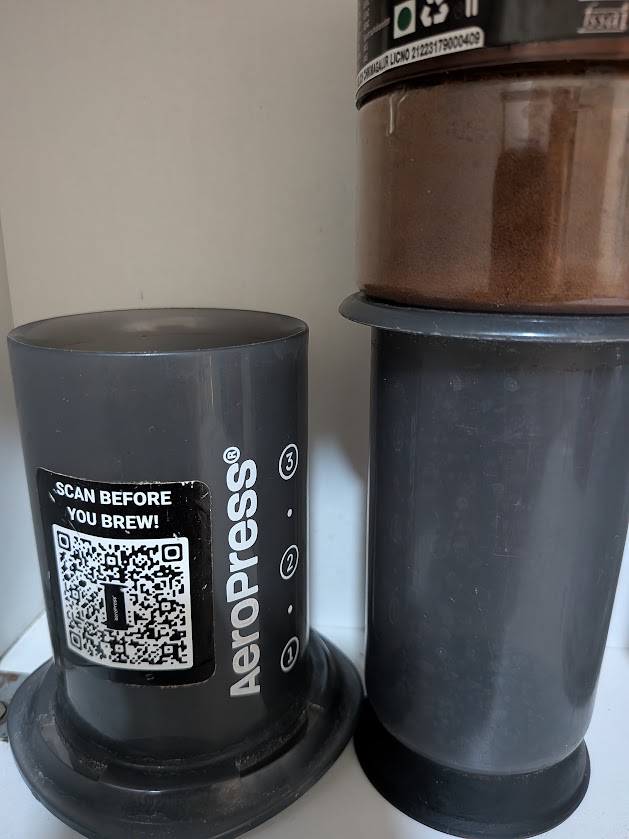
Somewhere in my cupboard still sits my beloved Aeropress, gifted by my dear friend and triathlete Rishi Sareen.
For years, it traveled with me to running events, early race mornings, hotel rooms, and long road trips. There was something deeply satisfying about manually preparing a strong black coffee before sunrise while runners slowly gathered at the start line.
In fact, if you look carefully at some of my older running posts like the 2025 Race Diary, coffee quietly appears in the background of many memories.
Some coincidences only become meaningful in hindsight.
I later realized that my last cup of coffee before starting this experiment was also with Rishi during his Bengaluru visit. We met for breakfast at Bengaluru Cafe and spoke about training, endurance sports, and of course, coffee itself without realizing that the very next day I would unexpectedly begin this caffeine experiment.
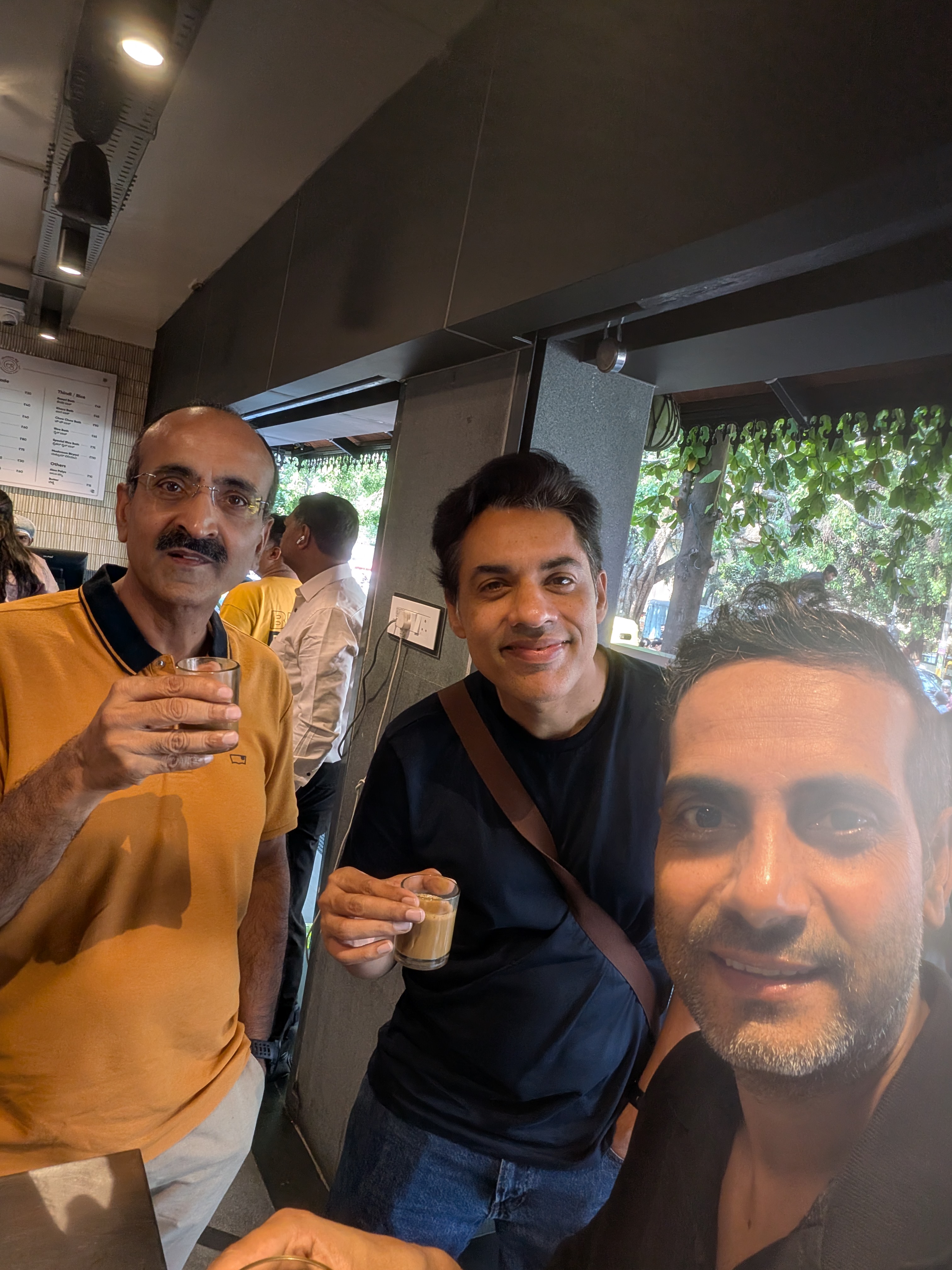
Suresh, Rishi and me at Bengaluru Cafe, unknowingly marking my last coffee before the experiment began.
So no, this is probably not the end of my relationship with coffee.
Maybe just the beginning of a slightly more conscious one.
Further Reading & Listening
A few books, podcasts, and discussions that I found interesting while reflecting on caffeine, recovery, sleep, and performance culture:
-
Huberman Lab – Using Caffeine to Optimize Mental & Physical Performance
-
Michael Pollan on caffeine, rituals, and quitting coffee for three months – The Joe Rogan Experience
-
Michael Pollan Shares Everything He Learned After Quitting Caffeine for 3 Months