Kumaon Himalaya — Views from My Hometown
Some places stay with you forever. For me, it is the view from Berinag — a small hill town in Pithoragarh district of Uttarakhand, nestled at around 1900 metres in the Kumaon Himalayas. This is where I grew up, and these photographs were taken from there.
Berinag and the Kumaon Himalayas
Berinag sits on a ridge that offers one of the finest panoramic views of the central Himalayan range in all of Kumaon. On a clear day, you can see an unbroken wall of snow-capped peaks stretching across the horizon — Nanda Devi, Nanda Kot, Panchachuli, Maiktoli, and many others that have no names on any map but are deeply familiar to those who grew up watching them.
The Kumaon Himalayas are often overshadowed by the more famous Garhwal ranges to the west, but they hold some of the most spectacular and relatively accessible high-altitude terrain in India. While Garhwal is home to some of Hinduism’s most sacred shrines — Badrinath, Kedarnath, Gangotri, and Yamunotri, collectively known as the Char Dham — Kumaon holds its own deep spiritual and natural heritage. Nanda Devi, at 7816 metres, is the highest peak entirely within India and dominates the skyline from much of Kumaon.
Berinag itself is known for two things among those who know it — the extraordinary Himalayan panorama visible from its ridge, and its tea gardens, which quietly produced some of the finest tea in Uttarakhand for well over a century.
The Tea Gardens of Berinag
The history of tea cultivation in Berinag goes back to the British colonial era, when the Kumaon hills were identified as having soil and climate conditions well suited to growing tea. The Berinag Tea Estate, established in the late 19th century, became one of the earliest tea gardens in the region. Situated between 1500 and 2000 metres, the gardens benefited from cool temperatures, misty mornings and clean mountain air — producing a tea with light, delicate flavour and floral muscatel notes, quite different from the bolder Assam teas grown at lower altitudes.
Sadly, the industry did not survive into the new century. The decline began in the late 1990s and the causes were largely self-inflicted — mismanagement, apathy from the original owners, and short-term thinking. Rather than investing in the gardens, landowners sold the estate land for town expansion and real estate development. What were once carefully tended rows of tea bushes gradually gave way to concrete. No working tea gardens remain in Berinag today — a quiet tragedy that most people outside the region never knew happened.
There is however a small thread of hope. I have heard — though not yet visited myself — that a few young entrepreneurs have revived tea cultivation near Chaukori. Something I hope to see for myself on the next trip home.
Nanda Devi — The Bliss-Giving Goddess
Nanda Devi is more than just a mountain. She is the presiding deity of Uttarakhand — revered across the region through the Nanda Devi Raj Jat Yatra, one of the longest religious journeys in the Himalayas, held once every twelve years. The name translates roughly as “the bliss-giving goddess” and the peak lives up to it — few sights are as awe-inspiring as watching the first light of dawn strike the summit.
The mountain is surrounded by a sanctuary — the Nanda Devi Biosphere Reserve — which was closed to trekkers and mountaineers for decades to allow its fragile ecosystem to recover. This has made the area one of the best-preserved high-altitude environments in the Himalayas.
Two Views, Two Moments
These two photographs were taken from Berinag, looking towards the Nanda Devi massif. One captures the peak in the clarity of daytime, the other in the soft amber light of early morning when the snow glows warm against a cold sky.
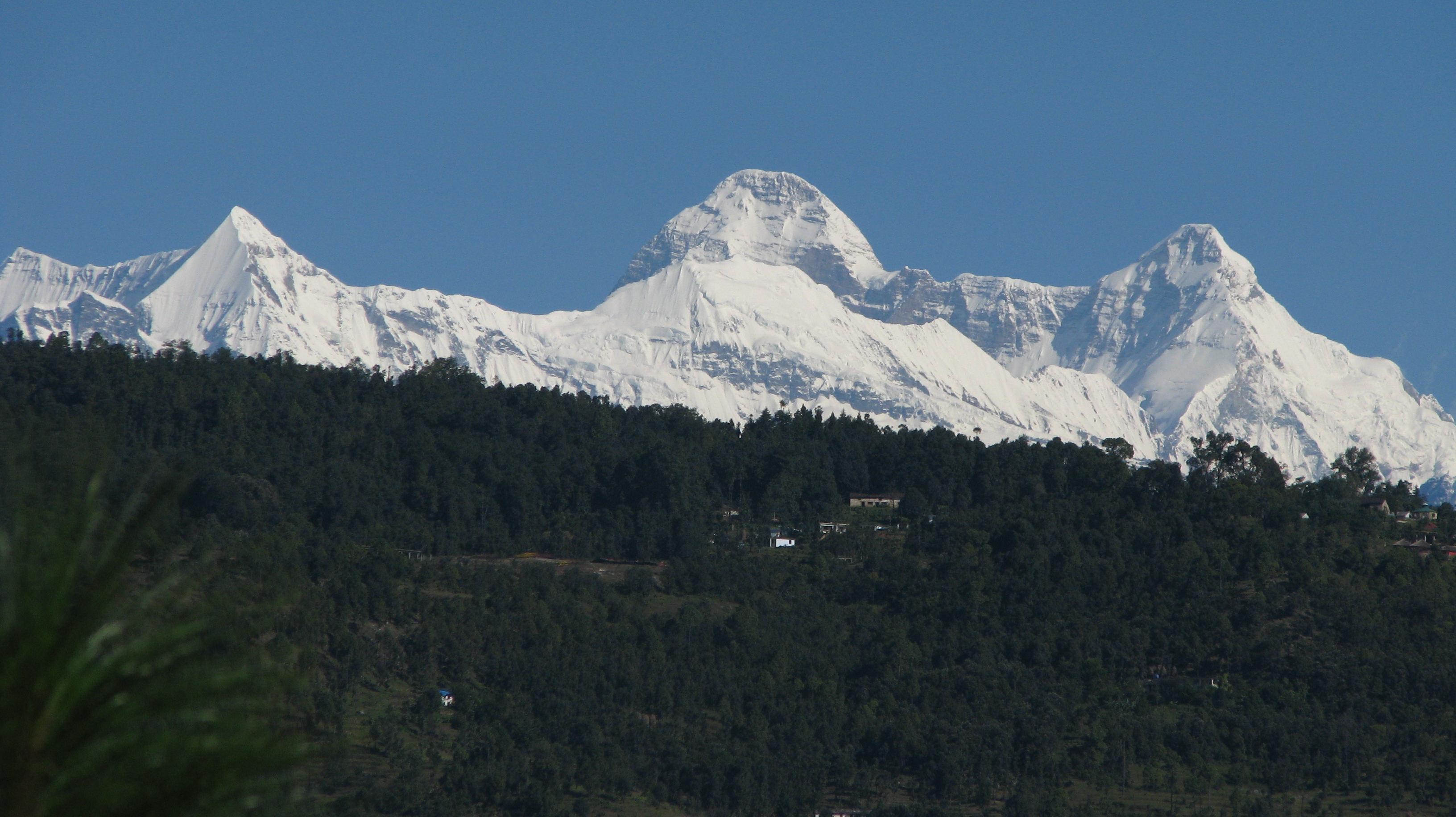 Nanda Devi and the Kumaon Himalaya range — daytime view from Berinag
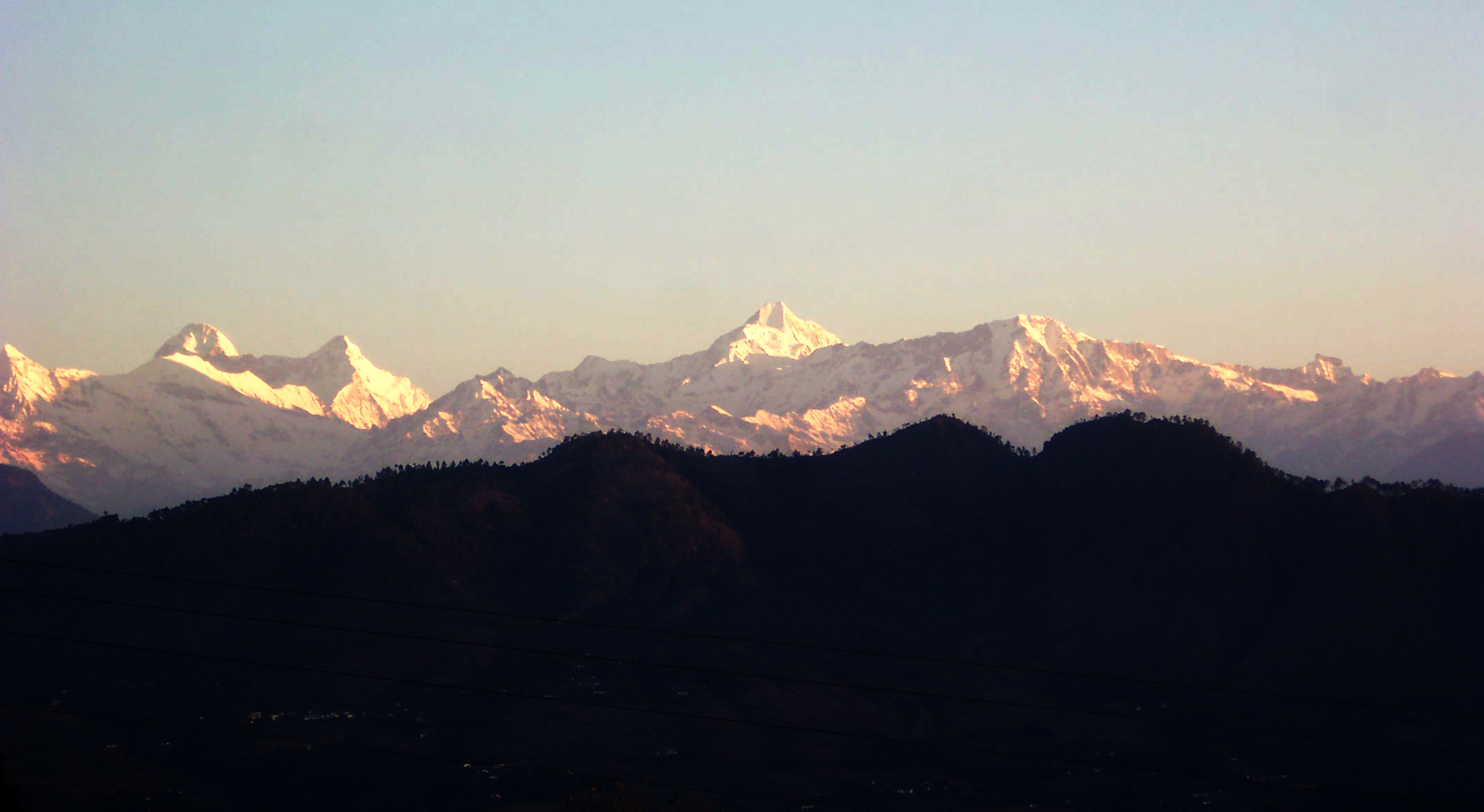 Early morning light on Nanda Devi — view from Berinag, my hometown
Growing up with this view as the backdrop to daily life gives you a certain relationship with scale and patience. The mountains do not move. They do not hurry. They have been there long before us and will remain long after. There is something grounding about that — something that stays with you no matter how far from home you go.
Berinag may be a small dot on the map of Uttarakhand, but to those of us who carry it with us, it is as large as the peaks it looks upon.